Chapter 5 — ESP32 vs Pico W: Choosing Your Edge Device
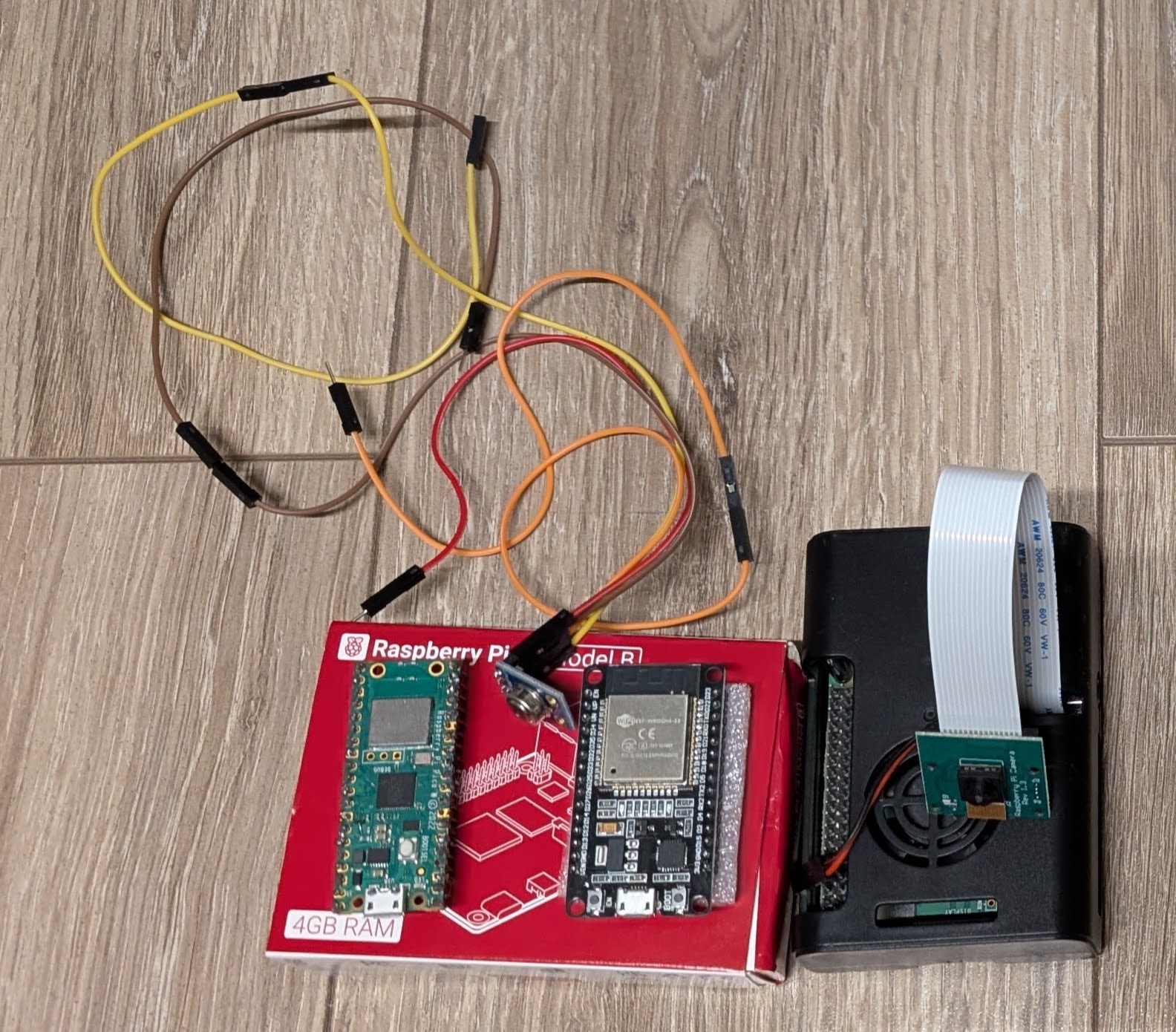
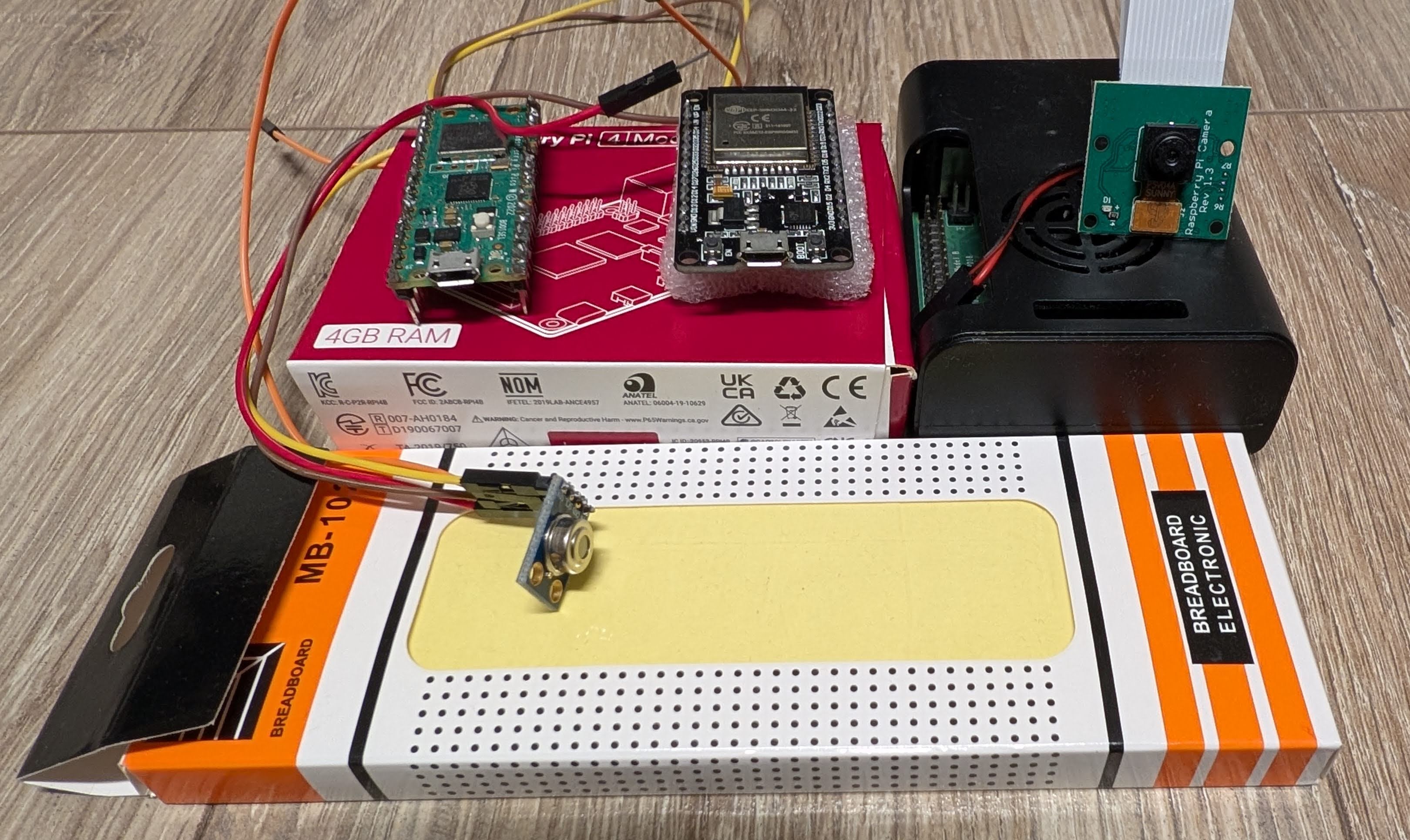
Both the ESP32 and the Raspberry Pi Pico W are capable, cheap, WiFi-enabled microcontrollers. They are not interchangeable.
The Comparison That Matters
| Feature | ESP32 | Pico W |
|---|---|---|
| CPU | Dual-core 240 MHz Xtensa | Single-core 133 MHz ARM Cortex-M0+ |
| RAM | 520 KB | 264 KB |
| WiFi | Yes (+ Bluetooth) | Yes (no Bluetooth on base model) |
| GPIO pins | 34 | 26 |
| ADC (analog input) | 18 channels, 12-bit | 3 channels, 12-bit |
| Language | Arduino (C++), MicroPython, ESP-IDF | MicroPython, C/C++ SDK |
| Power consumption | ~160mA active | ~40mA active |
| Price | €3–€8 | €5–€7 |
| Community | Massive | Large and growing |
Choose the ESP32 when:
- You need more GPIO pins or more analog inputs
- Your project uses Bluetooth (BLE sensors, beacons)
- You’re using the Arduino ecosystem (C++ libraries)
- You need more compute for local signal processing
Choose the Pico W when:
- You’re writing Python and want the smoothest experience
- Power consumption matters (battery-powered nodes)
- You’re integrating tightly with Home Assistant via the HA SDK
- You want a board that’s easier to debug over USB
flowchart TD
    Start([New sensor node?]) --> Q1{Needs Bluetooth?}
    Q1 -->|Yes| ESP32
    Q1 -->|No| Q2{More than 3 analog inputs?}
    Q2 -->|Yes| ESP32
    Q2 -->|No| Q3{Primary language?}
    Q3 -->|Arduino / C++| ESP32
    Q3 -->|Python| Q4{Ultra-low power?}
    Q4 -->|Yes — years on battery| PicoW[Pico W]
    Q4 -->|No| Either[Either works\nPick what you have]
    ESP32[ESP32]

    style ESP32 fill:#fff3e0,stroke:#e65100
    style PicoW fill:#e3f2fd,stroke:#1565c0
    style Either fill:#f3e5f5,stroke:#6a1b9a
Solar Panel Integration
Both boards can be powered from a solar panel with a charge controller and a LiPo battery. The typical setup:
Solar panel → TP4056 charge controller → 18650 LiPo battery → 3.3V LDO regulator → ESP32 or Pico WThe TP4056 handles the charge/discharge cycle protection. The LDO regulator steps the battery voltage (3.7–4.2V) down to the stable 3.3V the microcontroller needs.
A solar-powered sensor node that reads temperature and humidity every 5 minutes will run indefinitely with a 5W panel and a 2600mAh battery — even in a Polish winter with 4 hours of effective sunlight per day.
Deep sleep between readings is the key: instead of running the main loop continuously, the microcontroller goes into a low-power sleep state (drawing microamps) and wakes on a timer. The ESP32 deep sleep implementation draws roughly 10µA, extending battery life by a factor of 100 compared to active operation.
Takeaway: ESP32 for more IO and Bluetooth. Pico W for Python-first and lower power. Both support solar with a TP4056 and deep sleep.